Practical Uses for the Dry Tree Blue Orange Line Icon Set
Finding the right visual asset can often feel like searching for a needle in a haystack. You need something that communicates a specific concept—in this case, nature, growth, or perhaps a seasonal theme—but it also needs to be versatile, professional, and ready for the technical demands of modern design. The Dry Tree Blue Orange Line Icon is a graphic resource that addresses these needs directly. It is not merely a single image, but a comprehensive toolkit designed for creators who value both aesthetic quality and functional flexibility.
Understanding the Visual Concept
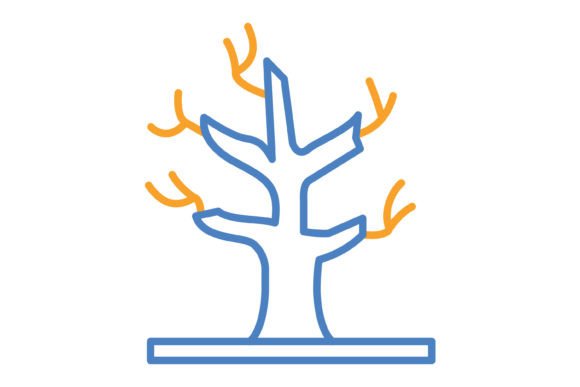
At its core, this icon features a stylized representation of a tree with a bare, branching structure. The "dry" aspect suggests a minimalist, perhaps autumnal or skeletal form, which is powerful for conveying ideas of structure, resilience, or simplicity. The defining characteristic, however, is its color scheme: a combination of blue and orange lines. This isn't a photorealistic rendering. Instead, it’s a clean, line-based illustration. The blue might represent stability or sky, while the orange adds a vibrant, energetic accent, perhaps symbolizing sunset, warmth, or a focal point. This dual-color approach makes it more visually interesting than a single-tone icon, allowing it to stand out without overwhelming a design.
Where This Icon Finds Its Purpose
The true value of a resource like this is unlocked when you move beyond the abstract and consider its application. Here are some real-world scenarios where the Dry Tree Blue Orange Line Icon becomes a practical solution.
- Digital Product Design: Imagine you're building a meditation or mindfulness app. The dry tree could serve as an icon for a "grounding" exercise module, its stability symbolized by the sturdy trunk, its mindfulness aspect by the open, airy branches. The blue and orange colors can be matched to your app's brand palette, creating a cohesive user experience. Similarly, for a weather app, it could elegantly represent a "clear, windy day" or a specific seasonal forecast.
- Environmental and Educational Materials: For a website focused on ecology, botany, or even climate change, this icon is perfect. It can illustrate articles about deciduous trees, seasonal cycles, or drought-resistant flora. In a presentation for a geography class, a teacher could use it to visually punctuate a section on biomes or forest conservation, making the information more engaging for students.
- Brand Identity and Marketing: A local nursery, a sustainable goods brand, or a landscaping company could integrate this icon into their logo or marketing collateral. It conveys a connection to nature with a modern, graphic sensibility. On social media, it can be used as a recognizable profile picture or a recurring visual element in posts about outdoor activities, gardening tips, or environmental awareness campaigns.
- Print and Publication: Its utility isn't confined to screens. As a vector graphic, it scales perfectly for print. Think of it as a chapter opener in a book about nature writing, a spot illustration in a magazine feature on urban parks, or a decorative element on packaging for organic products. The line art style ensures it reproduces cleanly in both color and grayscale.
Tailoring the Icon to Your Audience
Different users will approach this asset with different goals, and the icon's design accommodates that.
For the App Developer or UI/UX Designer: Your primary concern is integration and performance. The included SVG format is your best friend here. It's a vector format that will remain crisp on any screen resolution, from a standard smartphone to a high-density 4K display. The PNG with a transparent background is equally crucial, allowing you to place the icon over any color or image without a distracting white box. The fact that it's designed for mobile apps and websites means the line weights and details have been optimized for clarity at small sizes.
For the Graphic Designer or Illustrator: You need editability. The AI and EPS files are your starting points. These vector formats allow you to open the icon in Adobe Illustrator and modify every single path, color, and stroke. Want to change the orange to a corporate green? Easy. Need to adjust the branch structure to better fit a layout? You have full control. This transforms the icon from a static image into a customizable component.
For the Educator or Content Creator: You likely need something quick and effective. The JPG and PNG files are ready to drop into a presentation slide, a blog post, or a social media graphic. The time saved by not having to commission custom art or fiddle with complex design software is significant. You get a professional, thematic visual that enhances your message immediately.
Making the Most of the Resource
Before diving in, a few practical considerations will help you get the best results.
- Check the Context: The "dry tree" motif carries specific connotations. While it can represent strength and structure, in some contexts it might imply dormancy or loss. Ensure the symbolism aligns with your message. For a project about renewal or lush growth, you might need to adapt it or pair it with complementary visuals.
- Color Harmony: The preset blue and orange are part of its identity, but don't be afraid to adapt. If you're using the vector files, recoloring is simple. Ensure the new colors have enough contrast to maintain the icon's legibility, especially at smaller sizes.
- Scalability is a Strength, But Test It: While vectors scale infinitely, the perception of detail can change. Test the icon at the smallest size you intend to use it (like a 16x16 pixel favicon) to ensure the branching structure remains discernible and doesn't turn into a blurry blob.
- Integration Over Isolation: An icon rarely works alone. Consider how it interacts with your typography, other icons in your set, and the overall visual hierarchy of your design. Its line-weight should be consistent with other graphical elements for a polished look.
The package containing 100 vector icons in five different formats is built for this kind of practical workflow. It acknowledges that a single use case doesn't exist. The Dry Tree Blue Orange Line Icon is a starting point—a well-crafted, versatile visual element. Its strength lies in its clean design, its thoughtful color accent, and the technical preparedness of the file formats. Whether you're shaping a user interface, educating an audience, or building a brand, it provides a reliable and adaptable piece of visual communication. Ultimately, the best icon is the one that does its job quietly and effectively, supporting your content without distracting from it. This set is designed with that principle in mind.