Eraser Glyph Icon: A Practical Guide for Modern Digital and Print Projects
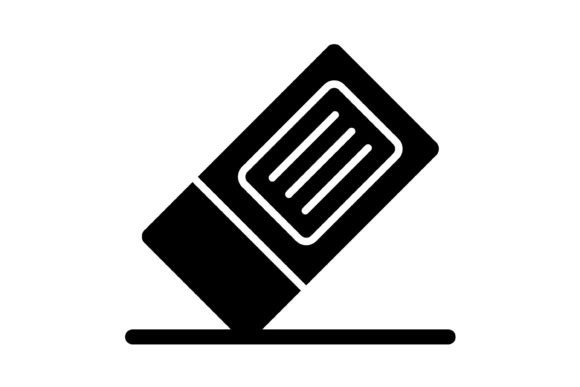
In the world of digital design and document preparation, the eraser is a universally understood symbol. It represents correction, deletion, and the ability to start fresh. The Eraser Glyph Icon is a specific implementation of this concept, designed as a clean, minimalist vector graphic. Unlike a simple raster image, this icon is crafted as a glyph, meaning it focuses on the essential form and function, stripped of unnecessary detail. This makes it exceptionally versatile for interfaces where clarity and quick recognition are paramount. Whether you are designing a mobile app's toolbar, a web-based text editor, or a printed instructional manual, the right icon can significantly enhance user experience and communication.
Understanding the Core Components: File Formats and Flexibility
A key aspect that defines the practicality of an icon set like the Eraser Glyph Icon is its delivery in a comprehensive package. The inclusion of five distinct file formats—AI, EPS, JPG, PNG with a transparent background, and SVG—addresses a wide spectrum of design and development needs. Each format serves a specific purpose, and understanding their differences is crucial for efficient workflow.
- AI (Adobe Illustrator) and EPS (Encapsulated PostScript): These are the master vector formats. They are essential for designers who need to edit the icon's paths, colors, or shapes directly. If your project requires customizing the icon to match a specific brand color palette or integrating it into a larger illustration, these formats are your starting point. They ensure infinite scalability without any loss of quality, which is a non-negotiable requirement for professional print materials and high-resolution displays.
- SVG (Scalable Vector Graphics): This is the web and app developer's preferred vector format. SVG code is lightweight and can be manipulated with CSS and JavaScript, allowing for dynamic color changes, animations, and responsive sizing. For a mobile app or a responsive website, using the SVG version of the Eraser Glyph Icon ensures it looks crisp on every screen density, from standard displays to high-DPI Retina screens, while keeping file sizes minimal.
- PNG (Portable Network Graphics) with Transparency: The PNG version is a raster image with a transparent background. This is incredibly useful for quick implementation in presentation software like PowerPoint or Keynote, in document editors, or in design mockups where vector editing isn't necessary. The transparency allows the icon to be placed over any background color or image without a distracting white box around it.
- JPG (Joint Photographic Experts Group): While not ideal for icons due to its lossy compression and lack of transparency, the JPG format is included for maximum compatibility. It can be useful in contexts where file format support is limited, such as certain legacy systems, basic email attachments, or social media posts where a simple, non-transparent graphic is sufficient.
This multi-format approach means the Eraser Glyph Icon is not just a single asset but a toolkit. It eliminates the common friction of needing to convert files or search for a different format after the initial download, saving valuable time in a project's lifecycle.
Evaluating Design Philosophy: Glyphs vs. Detailed Illustrations
When selecting icons, you are often choosing between two broad styles: detailed, illustrative icons and minimalist glyphs. The Eraser Glyph Icon firmly falls into the latter category. This design choice comes with distinct advantages and tradeoffs.
Strengths of the Glyph Style:
- Clarity and Speed: Glyph icons are designed for instant recognition. In a user interface with limited space, such as a mobile app's bottom navigation bar or a dense toolbar, a simple eraser shape communicates its function faster than a detailed illustration of a pink eraser with shavings.
- Scalability: Simpler shapes scale down to very small sizes (like 16x16 pixels) more effectively. Complex details can become muddy or invisible at small scales, whereas a well-designed glyph remains legible.
- Visual Consistency: A set of 100 glyph icons, as offered, is more likely to have a unified visual weight and style. This creates a harmonious look across an entire application or document, which is a cornerstone of professional design.
Potential Limitations to Consider:
- Lack of Personality: For projects aiming for a playful, hand-crafted, or highly thematic aesthetic, a generic glyph might feel too sterile. A children's educational app, for instance, might benefit from a more whimsical, illustrated eraser character.
- Ambiguity Risk: In rare cases, an overly abstract glyph could be misinterpreted. The eraser symbol is fairly universal, but this principle applies to other icons. Context and labeling are always important.
The decision between a glyph and a more detailed icon style hinges on your project's goals. For corporate software, productivity tools, technical documentation, and most modern web services, the clarity and professionalism of a glyph like the Eraser Glyph Icon are typically the superior choice.
Practical Application: When is This Icon Set the Right Fit?
The description highlights suitability for mobile apps, websites, print, presentations, illustrations, and templates. Let's break down what that means in practice.
- Mobile Apps and Websites: The SVG format is perfect here. Developers can easily embed the icon, style it with CSS to match light/dark modes, and ensure it performs well. The eraser glyph is ideal for any app with editing functionality—note-taking apps, drawing tools, form builders, or content management systems.
- Print and Presentations: The AI/EPS files are invaluable for print designers creating manuals, booklets, or packaging. The PNG version works seamlessly in slide decks to visually indicate "delete this slide" or "remove this element" in instructional materials.
- Illustrations and Templates: The vector source files allow illustrators to incorporate the eraser into larger compositions. Template designers for documents or websites can include the icon as part of a standardized kit, ensuring users have consistent visual elements.
The claim of "100 vector icons" suggests this is part of a larger set. If your project requires a consistent family of icons (e.g., for a full editing suite with pencil, brush, cut, copy, paste), purchasing a cohesive set is far more efficient than sourcing individual icons from different providers, which can lead to style clashes.
Making an Informed Decision: Key Considerations
Before choosing the Eraser Glyph Icon or any similar resource, consider these factors:
- Project Scope: Do you need a single icon or a full set? A single icon might be sufficient for a one-off presentation, but a set is a better long-term investment for ongoing development work.
- Editing Needs: If you anticipate needing to modify the icon's shape or color, having the AI/EPS source files is critical. If you only need to use it as-is, the PNG or SVG may be enough.
- Style Cohesion: Does the glyph style fit your overall design language? Look at the other icons in the set to ensure they align with the aesthetic of your project.
- Licensing: Always verify the license. Ensure it permits your intended use, whether for personal projects, commercial products, or client work. The terms "Ready to use for all devices and platforms" should be backed by a clear license agreement.
- Quality of Craftsmanship: Examine the icon closely. Are the lines clean? Does it look balanced at multiple sizes? A well-designed icon is crafted with attention to optical balance and pixel-perfection at small sizes.
In conclusion, the Eraser Glyph Icon presents itself as a practical, versatile, and professionally crafted asset. Its strength lies in its simplicity, multi-format delivery, and suitability for a wide range of modern design contexts. It is an excellent choice for projects that prioritize clarity, scalability, and visual consistency. However, for projects demanding a unique artistic style or extreme thematic personality, exploring more illustrative alternatives would be worthwhile. By evaluating your specific needs against the features offered, you can determine if this icon set is the right tool to enhance your next project.